
Studying Full-Time at a Hawaiʻi Private School: Which Schools Admit International Students and How to Prepare
Only some Hawaiʻi private schools issue the I-20 for a student visa, and entry grades and English requirements differ by school. Based on the schools' official information, here is how full-time study works.

Summer programs can be attended briefly on ESTA, but studying at a Hawaiʻi school for a semester or longer requires a student visa (F-1). You can only apply for one with an I-20 issued by the school, and not many Hawaiʻi private schools issue it. Based on the schools' official information, here are the schools that admit international students and how the process works.
Schools that admit international students
- Hawaiʻi Baptist Academy (Nuʻuanu): issues the I-20 and admits mainly at grade 9. Grades 10–11 are considered case by case, and grade 12 applications are not accepted. International tuition for 2026–27 is $28,580 ($23,580 standard tuition plus a $5,000 international student fee), and required medical insurance is $176 a month. The school arranges homestays.
- Le Jardin Academy (Kailua): provides the I-20 and homestay for international students in grades 9–12. The SSAT is required, and the school says the I-20 takes about two weeks after it receives the passport. There is no ESL program, so reading, writing and speaking must be at grade level.
- Sacred Hearts Academy (Kaimukī): an all-girls school during the year. International students and English learners take an ESL assessment after admission, and the upper school offers ESL courses.
- Hawaiian Mission Academy (Makiki): a co-ed grade 9–12 school with a dorm and host families. It asks for TOEFL iBT 60 or Duolingo 95 and full-year tuition in advance.
There are also boarding schools such as Hawaiʻi Preparatory Academy on the Big Island. Entry grades and openings change every year, so first check whether there is space in the grade you want.
Student visa rules to know before applying
- Public schools are heavily restricted. F-1 students cannot attend public elementary or middle schools, and can attend a public high school for at most 12 months while paying full tuition. That is why most full-time study is at private schools.
- Parents cannot stay on their child's student visa. Dependent status on an F-1 is only for spouses and children. Parents who want to stay long term need their own status, so it is worth getting visa advice early.
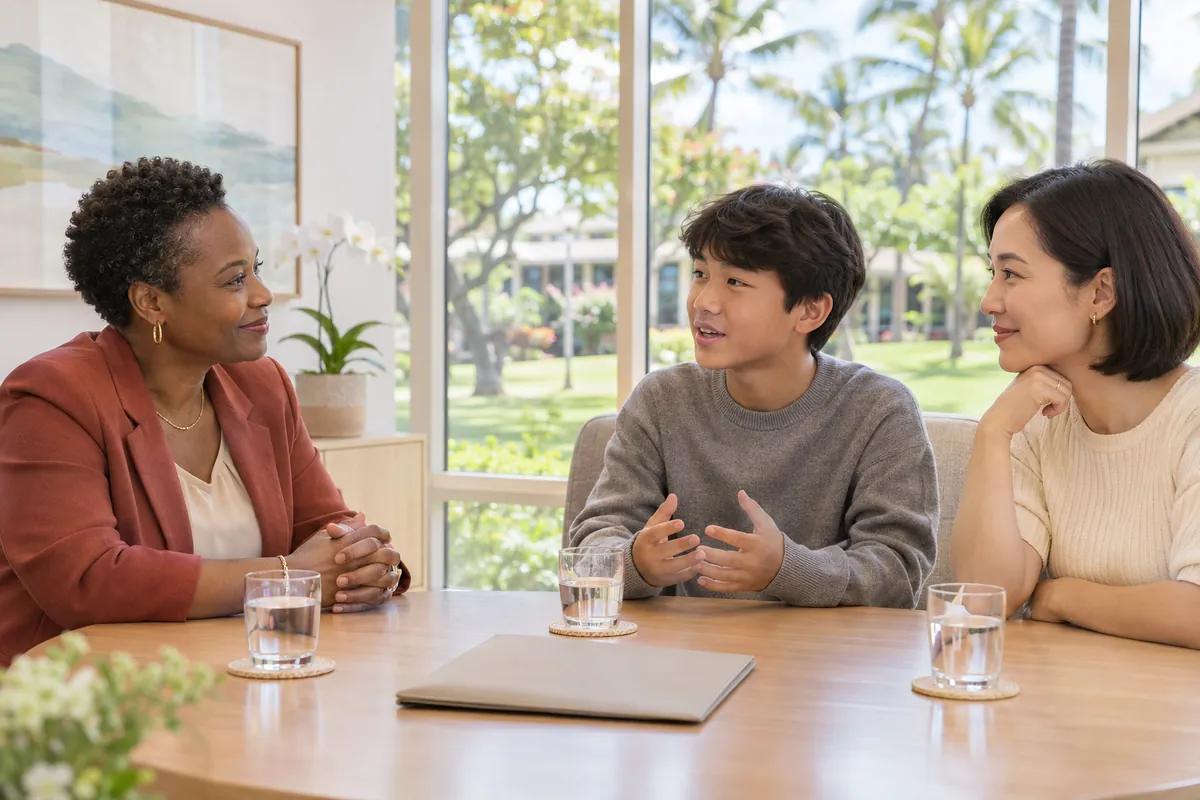
- A guardian is required. Minors live in a school-arranged homestay or dorm, or with a guardian the school approves.
The process
- Choose schools: compare entry grades, English requirements (ESL or not), housing (homestay or dorm) and tuition.
- Tests and documents: depending on the school, prepare SSAT, TOEFL or Duolingo scores, transcripts, recommendations and English immunization records.
- Apply and interview: submit the application, then the student and a parent interview online or on campus.
- After acceptance: pay tuition and insurance, receive the I-20 and book the student visa interview.
- Before departure: get in touch with the homestay family and submit the school's health documents.
Homestay life
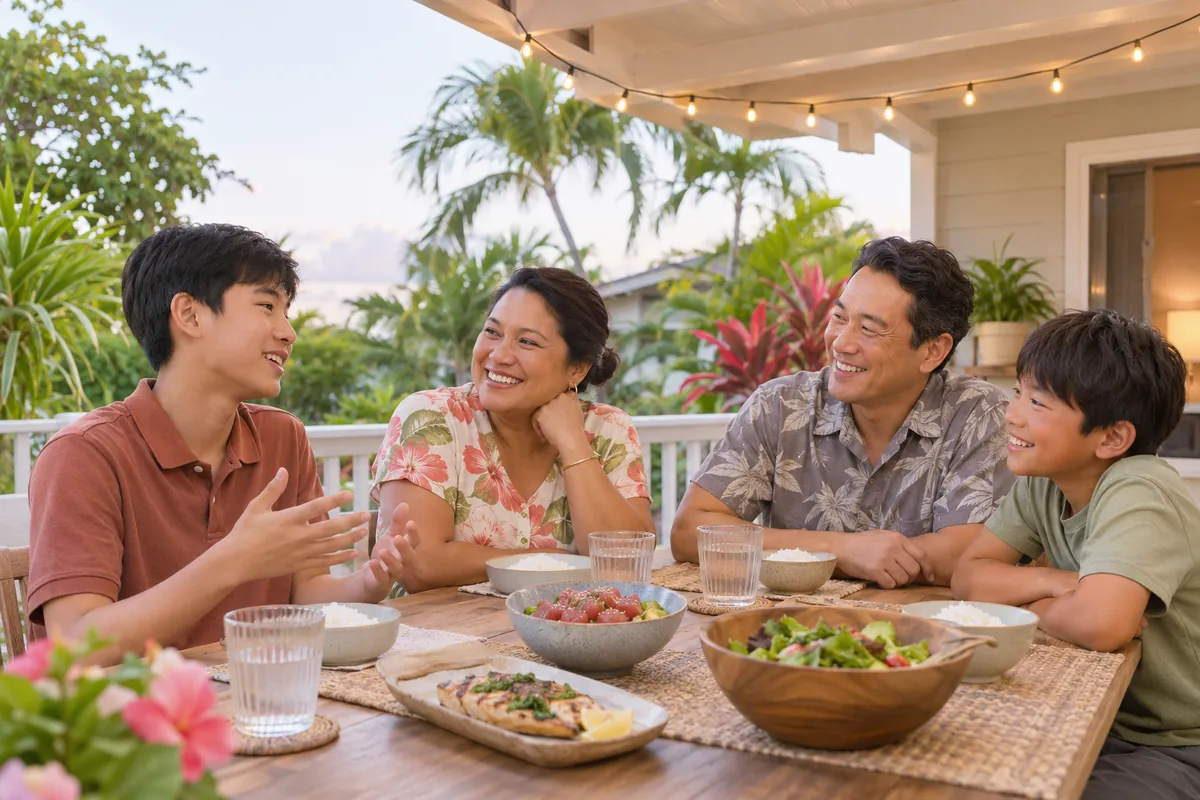
A homestay affects how a student settles in even more than English level does. Agreeing on rules for getting to school, meals, curfew and phone use at the start makes life easier for everyone. Students who first spend a summer or two in a Hawaiʻi school program usually adjust to full-time study much faster.
ALOHA LAKE works with families on school choice, application documents, interview preparation, homestay placement and visa advice. Details for each school are on the Partner Schools page.
Questions about anything in this post?
More posts
- Schooling & Schools
Hawaiʻi in the Summer Break: Programs for Elementary Kids from Late July to August (2027)
- Life in Hawaiʻi
A North Shore Day Trip with Kids: Dole Plantation to Waimea (Winter Edition)
- Schooling & Schools
Summer Programs at Hawaiʻi's Top 3 Private Schools: Punahou, ʻIolani and Mid-Pacific